Introduction
A Social Impact Assessment (SIA) is a systematic process that evaluates the potential social consequences of a proposed project on individuals, communities, and institutions. It enables organizations to understand stakeholder concerns, anticipate risks, enhance positive outcomes, and develop mitigation measures that promote long-term social well-being. Today, SIAs have evolved from being merely a regulatory requirement to becoming a strategic tool for project planning, stakeholder engagement, and Environmental, Social, and Governance (ESG) compliance.
Every development project whether it involves infrastructure, renewable energy, mining, manufacturing, urban development, or corporate social responsibility (CSR) is designed to generate economic and social value. However, projects can also bring unintended consequences, such as displacement of communities, livelihood disruptions, environmental stress, cultural changes, or unequal distribution of benefits. Identifying these impacts before implementation has become essential for ensuring sustainable and inclusive development.
What is a Social Impact Assessment?
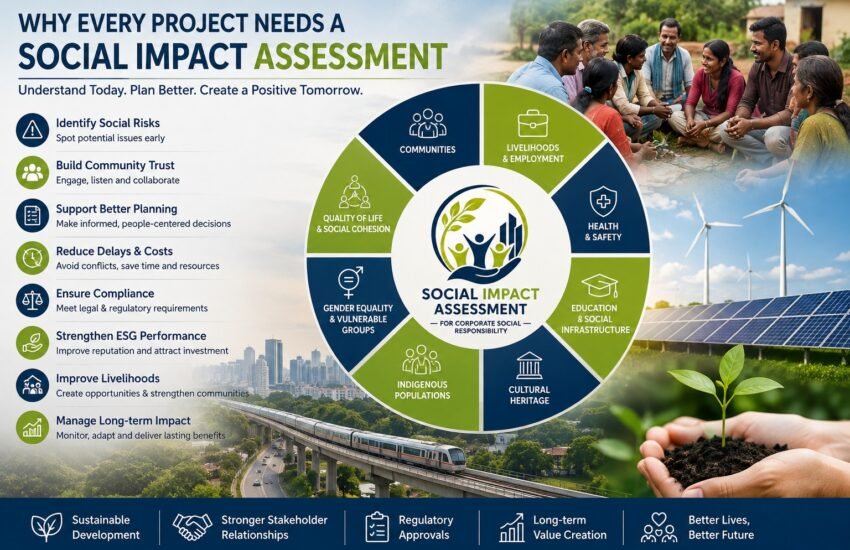
A Social Impact Assessment is the process of identifying, predicting, evaluating, and managing the social impacts associated with a project before and during its implementation. It examines how a project may affect:
- Local communities
- Livelihoods and employment
- Public health and safety
- Education and social infrastructure
- Cultural heritage
- Indigenous populations
- Gender equality and vulnerable groups
- Quality of life and social cohesion
The findings help organizations make informed decisions while minimizing adverse impacts and maximizing community benefits.
1. Identifies Social Risks Before They Become Problems
Every development project has the potential to affect local communities, livelihoods, and public infrastructure. A Social Impact Assessment (SIA) helps identify potential issues such as land acquisition challenges, displacement, livelihood disruption, traffic congestion, pressure on public services, and resource competition during the planning stage. By recognizing these risks early, project developers can implement effective mitigation measures, minimize conflicts, and prevent delays, legal disputes, and cost overruns during project execution.
2. Builds Community Trust and Social Acceptance
Community support is critical for the successful implementation of any project. An SIA promotes meaningful stakeholder engagement through public consultations, household surveys, focus group discussions, and continuous communication with affected communities. This transparent and participatory approach helps address concerns, incorporate community feedback into project planning, build trust among stakeholders, and strengthen the project’s social licence to operate, thereby reducing resistance and enhancing long-term project sustainability.
3. Supports Better Project Planning
Social considerations play an equally important role as technical, environmental, and financial factors in project planning. Information gathered through an SIA enables project developers to select suitable project locations, improve infrastructure planning, design targeted community development initiatives, create local employment opportunities, and enhance accessibility to public services. Incorporating these social insights into project design ensures that development activities are aligned with local needs while maximizing positive socio-economic outcomes.
4. Reduces Project Delays and Costs
Projects often experience delays due to community opposition, protests, litigation, or regulatory non-compliance arising from unresolved social issues. Conducting an SIA during the early stages of project development enables organizations to proactively identify and address stakeholder concerns before construction begins. This reduces implementation risks, minimizes costly design modifications, prevents project interruptions, and contributes to timely project completion within planned budgets.
5. Ensures Regulatory Compliance
Many governments, development agencies, and financial institutions require Social Impact Assessments as part of project approval and financing processes. An SIA supports compliance with national environmental and social regulations, land acquisition policies, the World Bank Environmental and Social Framework (ESF), IFC Performance Standards, the Equator Principles, and various ESG reporting frameworks. Demonstrating compliance not only facilitates regulatory approvals but also strengthens investor confidence and improves access to project financing.
6. Strengthens ESG Performance
Environmental, Social, and Governance (ESG) performance has become a key consideration for investors, lenders, customers, and regulatory authorities. A well-executed SIA demonstrates an organization’s commitment to responsible business practices, human rights, community well-being, diversity and inclusion, and sustainable development. By integrating social considerations into business operations, organizations can enhance corporate reputation, improve ESG ratings, attract responsible investment, and create long-term value for all stakeholders.
7. Improves Livelihood and Community Development Outcomes
Beyond mitigating adverse impacts, an SIA identifies opportunities to generate positive social and economic benefits for surrounding communities. Projects can promote inclusive development by creating local employment opportunities, supporting skill development programs, improving healthcare and educational facilities, empowering women and marginalized groups, strengthening local businesses, and investing in community infrastructure. These initiatives contribute to improved quality of life and sustainable socio-economic development while fostering positive relationships between project developers and local communities.
8. Helps Manage Long-Term Social Performance
Social impacts continue to evolve throughout the lifecycle of a project, from construction to operation and eventual closure. An SIA establishes baseline socio-economic conditions and defines measurable performance indicators that enable organizations to monitor changes over time. Continuous monitoring and periodic assessments help evaluate the effectiveness of mitigation measures, address emerging community concerns, improve stakeholder engagement strategies, and ensure that projects continue to deliver positive social outcomes throughout their operational life.
Industries Where Social Impact Assessments Are Essential
Social Impact Assessments have become an integral part of project planning across a wide range of industries where development activities directly influence communities and livelihoods. Sectors such as renewable energy, mining, oil & gas, transportation infrastructure, rail and metro systems, industrial manufacturing, urban development, airports, ports, smart cities, power transmission, water supply, and CSR initiatives increasingly rely on SIAs to identify social risks, engage stakeholders, secure regulatory approvals, and ensure sustainable project implementation. As governments and investors place greater emphasis on responsible development, SIAs have become an essential tool for balancing economic growth with social well-being.
The Long-Term Benefits of Social Impact Assessments
Organizations that integrate Social Impact Assessments into their project planning processes gain significant long-term advantages beyond regulatory compliance. SIAs help reduce project risks, accelerate approvals, strengthen stakeholder relationships, improve ESG performance, enhance corporate reputation, attract investment, and support sustainable community development. By proactively addressing social concerns and creating shared value for businesses and communities, an SIA transforms community engagement from a compliance obligation into a strategic business advantage, ultimately improving project success rates and ensuring long-term operational sustainability
Conclusion
Modern development is no longer measured solely by financial returns or engineering excellence. Successful projects are those that create lasting value for both businesses and communities. A Social Impact Assessment provides the insights needed to identify risks, strengthen stakeholder relationships, improve decision-making, and ensure sustainable outcomes throughout the project lifecycle.
As governments, investors, and communities place greater emphasis on responsible and inclusive development, integrating Social Impact Assessments into every project is becoming a business necessity rather than an optional exercise. Projects that understand and address their social impacts from the outset are better positioned to achieve regulatory compliance, maintain public trust, and deliver long-term economic and social value.
