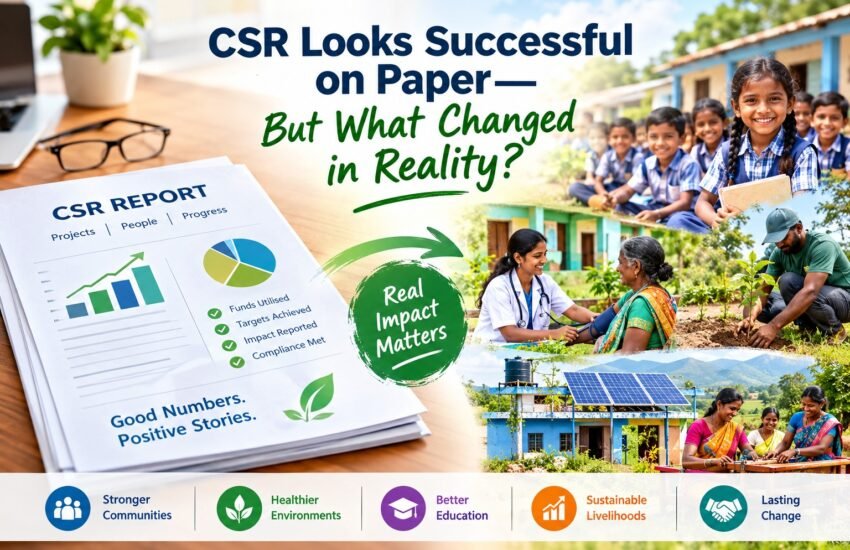
Corporate Social Responsibility (CSR) projects often look successful on paper. Reports may show the number of people reached, activities completed, funds spent, training sessions conducted, or facilities created. These numbers are useful for reporting, but they do not always show the complete picture. The most important question is not only whether the project was completed, but what actually changed in the lives of the people and communities it was designed to support. This is where Social Impact Assessment can help organisations understand the real outcomes of their CSR initiatives.
When CSR Looks Successful on Paper
A CSR project may achieve all its planned targets and still not create the expected long-term impact. For example, a skill development programme may train hundreds of people and provide certificates to participants. On paper, this may appear to be a successful project. However, the real impact can only be understood by asking what happened after the training. Did participants find employment? Did their income improve? Are they using the skills they learned? Did the training match local employment opportunities? Were there any barriers that prevented participants from using their new skills? These questions help organisations understand the difference between completing an activity and creating meaningful change.
Project Completion Is Not the Same as Impact
Completing planned activities is an important part of CSR implementation, but it does not automatically mean that the intended social outcomes have been achieved. A project can meet its targets while some beneficiaries continue to face the same challenges they had before the intervention. Looking at what happened after project completion gives organisations a better understanding of the actual value created by the programme.
Looking Beyond CSR Numbers
CSR reports often focus on measurable figures such as the number of beneficiaries, training sessions, healthcare camps, scholarships, or infrastructure projects. These figures help communicate the scale of an initiative, but they do not always explain the changes experienced by communities. A healthcare programme, for example, may reach thousands of people, but the deeper question is whether people received the support they needed and whether their access to healthcare improved after the programme.
From Beneficiaries to Real Outcomes
The number of people reached is only one part of the story. Organisations also need to understand how beneficiaries experienced the programme and whether their situation improved. A women-focused CSR programme may train hundreds of women, for example, but its wider impact may depend on whether participants gained employment, increased their income, improved their confidence, or became more involved in household and community decision-making.
Understanding the Role of Social Impact Assessment
Social Impact Assessment provides a structured approach to understanding the changes created by CSR programmes. It can help organisations examine whether a programme addressed real community needs, whether expected outcomes were achieved, what challenges affected implementation, and whether the benefits are likely to continue. It also provides an opportunity to understand the experiences of beneficiaries through surveys, interviews, focus group discussions, field visits, and other assessment methods.
Listening to the Community
Community participation is an important part of understanding social impact. Project reports may show what an organisation delivered, but beneficiaries can explain how the intervention affected their lives. Their feedback may reveal barriers, unexpected outcomes, or areas that need improvement. Listening to community members can therefore provide valuable evidence for improving CSR programmes.
Moving From Outputs to Outcomes
One of the key ideas in CSR impact measurement is the difference between outputs and outcomes. An output describes what a project delivered, while an outcome describes the change that happened because of the intervention. For example, providing skill training to 500 people is an output. If participants gain relevant skills, find employment, increase their income, and improve their household financial stability, these represent deeper outcomes.
Why Outcomes Matter
Focusing on outcomes allows organisations to understand whether their CSR investment is creating meaningful change. It also helps identify which activities are producing results and which areas may require changes. This evidence can support better planning and more effective CSR decision-making.
Why CSR Projects May Fall Short
Even carefully planned CSR projects can face challenges. A programme may not fully match local needs, beneficiaries may face financial or social barriers, training may not connect with available employment opportunities, or facilit
