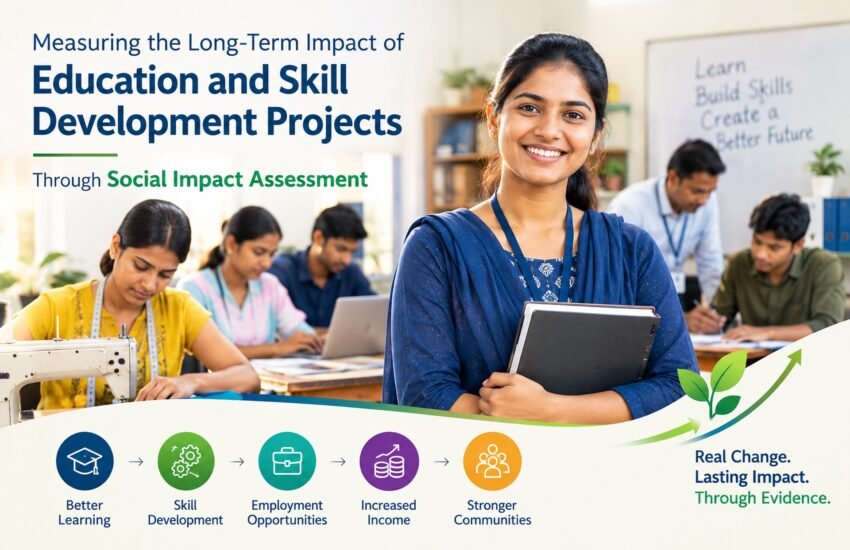
Education and skill development play an important role in improving people’s lives and creating better opportunities for communities. Many Corporate Social Responsibility (CSR) programmes invest in education, vocational training, digital learning, career guidance, and employment-oriented skill development. A Social Impact Assessment helps organisations understand how these initiatives contribute to education, employment, and community development.
These initiatives aim to help individuals gain knowledge, develop practical skills, find employment, and improve their quality of life. However, completing a training programme or enrolling students does not always mean that long-term change has happened. Through Social Impact Assessment, organisations can evaluate whether participants are applying their skills, accessing better opportunities, and experiencing positive changes in their lives.
The important question is: Are these programmes creating lasting benefits for individuals and communities?
This is where Social Impact Assessment becomes important. It helps organisations understand the actual results of their CSR initiatives, measure programme outcomes, identify gaps, and determine whether their investments are creating meaningful and sustainable social change.
1. Why Is Measuring Long-Term Impact Important?
CSR education and skill development programmes often report numbers such as students enrolled, training sessions conducted, certificates issued, and people who completed courses.
While these numbers show programme activities, they do not explain what happened after the programme ended.
For example, a skill development programme may train 300 young people. But how many of them found employment? How many are using their skills? Did their income improve? Are they able to support their families?
Measuring long-term impact helps organisations understand whether their programmes are achieving their intended goals.
2. Moving Beyond Participation to Real Outcomes
Participation is only the first step in an education or skill development programme. Real success should be measured through the changes participants experience over time.
Some important outcomes include:
- Improved Learning: Are students gaining better knowledge and understanding?
- Skill Development: Are participants developing practical and job-related skills?
- Employment Opportunities: Are trained individuals finding jobs or starting businesses?
- Income Improvement: Has their income increased after completing the programme?
- Confidence and Independence: Are participants becoming more confident and independent?
- Career Progression: Are individuals able to continue their education or improve their career opportunities?
These outcomes help organisations understand the difference their CSR programmes are making.
3. Measuring the Impact of Education Programmes
Education initiatives can create long-term opportunities for children, young people, and adults. However, their impact should not be measured only through school enrolment or attendance.
Organisations should also examine improvements in learning, academic performance, school completion, access to digital education, and opportunities for higher education.
For example, a CSR programme may provide learning support to students in rural communities. An impact assessment can examine whether students have improved their academic performance, continued their education, and gained access to better learning opportunities.
This helps organisations understand whether their educational support is creating lasting benefits.
4. Measuring the Impact of Skill Development Programmes
Skill development programmes aim to prepare individuals for employment and livelihood opportunities. Their success depends on whether participants can apply the skills they have learned.
Some important indicators include:
- Number of participants who completed training.
- Number of participants who secured employment.
- Number of individuals who started their own businesses.
- Changes in monthly income.
- Use of acquired skills in the workplace.
- Improvement in job opportunities and career growth.
- Continued employment after training.
For example, providing tailoring training to 200 women is an important activity. But the actual impact can be understood by checking how many women started tailoring businesses, received orders, earned an income, and continued their work.
5. The Importance of Follow-Up Assessments
Long-term impact cannot always be understood immediately after a programme ends. Some changes take months or even years to become visible.
Follow-up assessments help organisations track participants’ progress and understand whether the benefits continue over time.
These assessments can examine:
- Whether participants are still employed.
- Whether they are using their training skills.
- Whether their income has improved.
- Whether students have continued their education.
- Whether new livelihood opportunities have been created.
Regular follow-up also helps identify challenges that prevent participants from achieving their goals.
6. Understanding Community Needs and Challenges
Even well-planned CSR programmes may not achieve their expected results if they do not address the actual needs of the community.
For example, a training programme may provide technical skills, but participants may struggle to find employment because of limited local job opportunities, transport difficulties, lack of equipment, or family responsibilities.
Understanding these challenges is essential for improving programme effectiveness.
Community consultations, surveys, interviews, and discussions with participants can help organisations identify these gaps and develop more suitable interventions.
7. How Social Impact Assessment Helps Measure Sustainable Change
Social Impact Assessment provides a structured approach to understanding the outcomes of education and skill development programmes.
It helps organisations:
- Understand the needs of target communities.
- Establish baseline information before programme implementation.
- Identify suitable indicators to measure progress.
- Compare the situation before and after the intervention.
- Understand participants’ experiences and challenges.
- Measure employment, income, education, and livelihood outcomes.
- Identify areas for improvement in future CSR programmes.
By combining quantitative data with feedback from participants, organisations can develop a clearer picture of the impact created by their initiatives.
8. Turning Assessment Findings into Better CSR Strategies
The purpose of impact assessment is not only to measure results but also to improve future programmes.
Assessment findings can help organisations identify which activities are working, which groups need additional support, and what changes are required to achieve better outcomes.
For example, if a skill development programme records high participation but low employment, organisations can explore stronger industry partnerships, practical training, placement support, and career guidance.
This approach helps CSR programmes become more relevant, effective, and sustainable.
Conclusion: Measuring Change Beyond the Numbers
Education and skill development are important investments in people’s futures. However, their success should not be measured only by the number of students enrolled, people trained, or certificates issued.
The real impact lies in improved learning, better employment opportunities, increased income, stronger confidence, and sustainable livelihoods.
Social Impact Assessment helps organisations move beyond activity-based reporting and understand the long-term changes created by their CSR initiatives.
When organisations measure outcomes, listen to communities, and learn from assessment findings, they can design better programmes and create meaningful opportunities for future generations.
Don’t just count how many people were trained. Measure how their lives changed.
